Ferdinand Berthoud’s New FB 2TV Turns a Decade of Chain-and-Fusee Craft Inside Out
Ten years after relaunching the 18th-century watchmaker’s name, Ferdinand Berthoud unveils the Chronomètre FB 2TV, which flips its signature chain-and-fusee mechanism to the dial side, adds a flying tourbillon and zero-reset seconds, and opens a new collection built on mechanical expression.
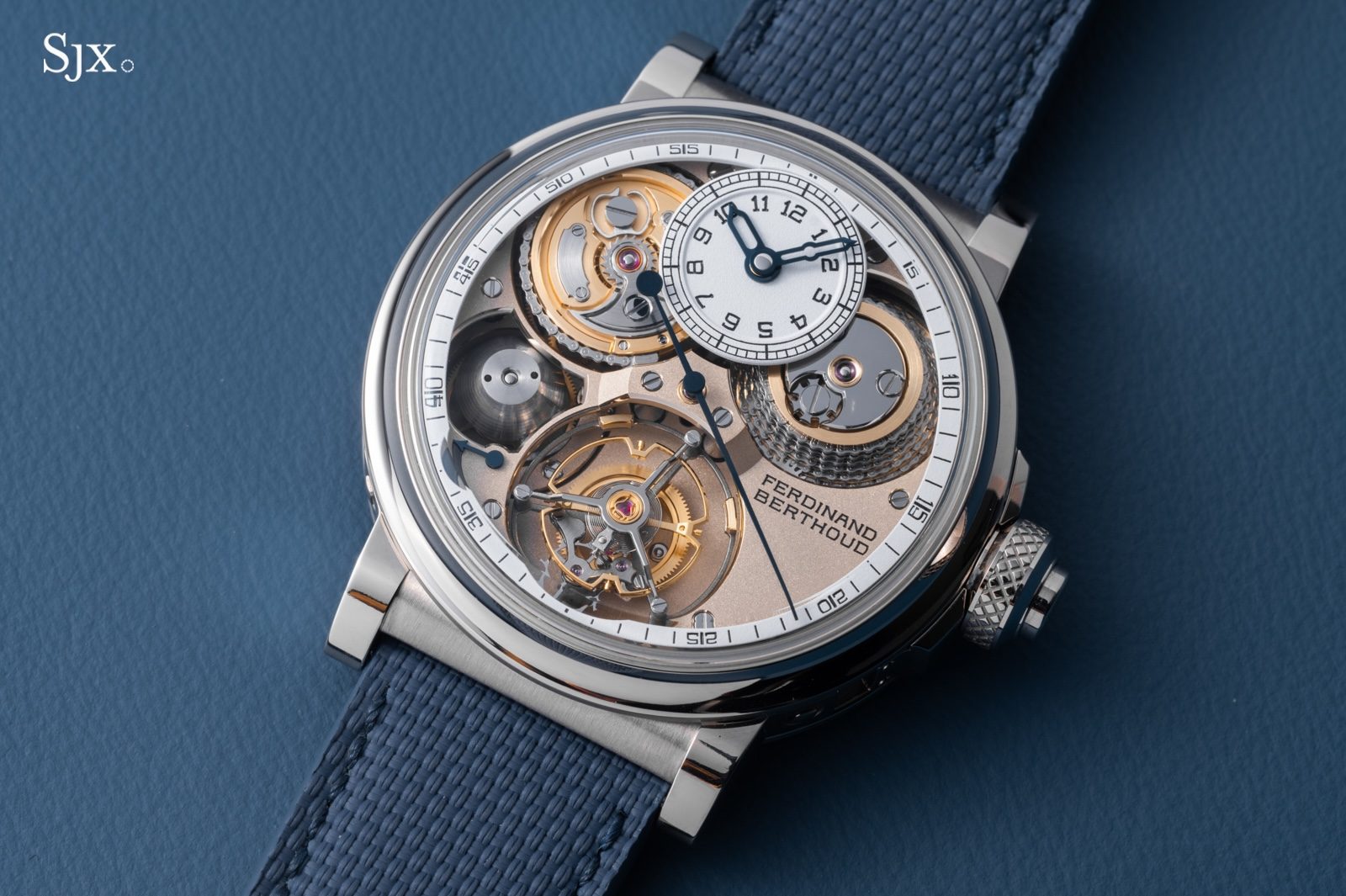
Image: watchesbysjx.com
A Decade In, a New Direction
It has been ten years since Ferdinand Berthoud returned as a contemporary brand, and the first model of its new Mesure du Temps 1787 collection signals a deliberate shift. The Chronomètre FB 2TV, launched under the continued leadership of Chopard Co-President Karl-Friedrich Scheufele, does not simply refine the house style—it reorients it. The chain and fusee, which had been a hallmark of the brand since its 2016 relaunch, is now inverted and exposed on the dial side, alongside a flying tourbillon and a zero-reset seconds mechanism.
This is the brand’s first flying tourbillon, and the movement has been turned over so that its key functional elements face the wearer. The approach is not unprecedented—independents such as Kari Voutilainen have demonstrated demand for inverted movements. But for Ferdinand Berthoud, the format allows a more mechanical, almost scientific presentation that echoes the brand’s namesake.
Each FB 2TV receives more than 300 hours of decoration, and the finishing is visible across the German silver dial plate, which is hand-sandblasted and bordered with precise bevels. The watch is currently offered in Fairmined 18k white gold, with a price of EUR382,000 before taxes.
Form Follows Function, an 18th-Century Dashboard
Ferdinand Berthoud, the 18th-century watchmaker after whom the brand is named, approached horology as a scientist. His early marine clocks featured dials that looked more like miniature dashboards than coherent surfaces, with experimentation taking precedence over aesthetic convention.
The FB 2TV consciously channels that legacy. The layout feels less like a unified design and more like a presentation of components: the chain and fusee is displayed prominently, the flying tourbillon sits at the lower right, and an oversized cone and feeler system for the power reserve dominates the upper area. That cone, which takes up significant real estate, is paired with a power reserve hand and scale that appear almost as an afterthought, tucked beside the tourbillon on a sliver of German silver.
The proportions may seem odd, but they reinforce the connection to an era when design codes were less established. Berthoud also favoured an arc-shaped hour window in his historical pieces, a detail that has been reimagined in other modern Ferdinand Berthoud models like the FB RS Régulateur Squelette. The result is a watch that feels less like a unified statement and more like a working instrument.
Chain, Fusee, and the Feel of Winding
The chain and fusee remains at the heart of the FB 2TV. This device, common in Berthoud’s day, was used to deliver constant torque to the escapement. The chain alone adds 465 stamped links and 311 pins to the component count, and measures 279 mm in length—nearly double the chain used in A. Lange & Söhne’s Pour le Merite watches.
Like Lange’s pioneering chain-and-fusee movements from 1994, the FB 2TV uses a differential system for its maintaining power. This feature allows power to flow to the escapement even while the cone reverses direction during winding. The choice of a differential, rather than a traditional Harrison-style maintaining power, results in a winding feel that is remarkably tactile, with richer feedback through the fingertips than is typical for most movements.
Ferdinand Berthoud has also improved winding efficiency compared to its earlier chain-and-fusee watches: the FB 2TV requires 10 fewer turns of the crown to fully wind. The result is a 60-hour power reserve with a hand-wound calibre that operates at 21,600 beats per hour.
Flying Tourbillon and COSC Certification
The flying tourbillon is new territory for Ferdinand Berthoud, and its dial-side placement makes it easier to admire the care taken in its construction. The delicate three-armed cage contains a massive 11.2 mm free-sprung balance wheel, which oscillates on an overcoil hairspring. The cage itself is terraced to accommodate the height of the overcoil—a detail that characterised some of the best historical tourbillons. The flying tourbillon is mounted to a modular plate, allowing easy removal of the entire assembly. That plate, like the rest of the movement, is hand-frosted German silver, creating a radiant but uniform backdrop for the rotating regulator. This contrast is significant: many tourbillons, including some made by Ferdinand Berthoud, suffer from a lack of visual distinction against their surrounding components. Every Chronomètre FB 2TV is submitted for COSC certification. While the test is not especially challenging for a maker of this calibre—mass-market industrial brands produce certified chronometers by the hundreds of thousands—its use is unusual at this end of the market.
Reset to Zero, and Back to Berthoud’s Roots
The FB 2TV features a small, instrument-like dial at the top, carrying the brand’s signature typeface and hands. Its matte white finish and engraved, lacquered markings ensure legibility despite its diminutive size. The configuration is reminiscent of Berthoud’s original Montre Astronomique No.3, which also inspired the Naissance d’une Montre 3.
A pusher in the crown resets the seconds hand to zero for precise time-setting or for timing intervals of up to 60 seconds. This function gives the collection its name, Mesure du Temps, and adds an interactive element to the wearing experience. Through the case back, the scythe-like reset hammer and open-worked snail cam are exposed—both black-polished steel—alongside a large, mysterious-looking ring gear that is part of the motion works used to set the hands.
Case, Finish, and the Weight of a Decade
The 44 mm case is similar to that of the FB 2RE, though the FB 2TV is slightly thicker at 15.46 mm. The design is distinctly steampunk in character, with bolted lugs and screwed crown guards giving it an antique feel. The details are beautifully wrought, down to the case back engravings in the brand’s signature font.
There is one notable omission: the vitrine-like windows of previous Ferdinand Berthoud models, which offered a view of the chain and fusee or escapement from the side of the case, are gone. With the inverted chain and fusee now exposed on the dial side, such windows are redundant, yet their absence is felt, given that observation windows date back to Berthoud himself.
The movement architecture was not designed as an exercise in maximising internal angles—the slender-spoked wheels feature rounded corners—but the quality of execution is immaculate. All visible jewels are set in gold chatons, many complemented by radial bridge cambers and crisp internal angles. The case is notably hefty, a consequence of its size and the fine materials, and it carries the weight of a decade of Ferdinand Berthoud’s consistent, if sometimes idiosyncratic, pursuit of horological excellence.
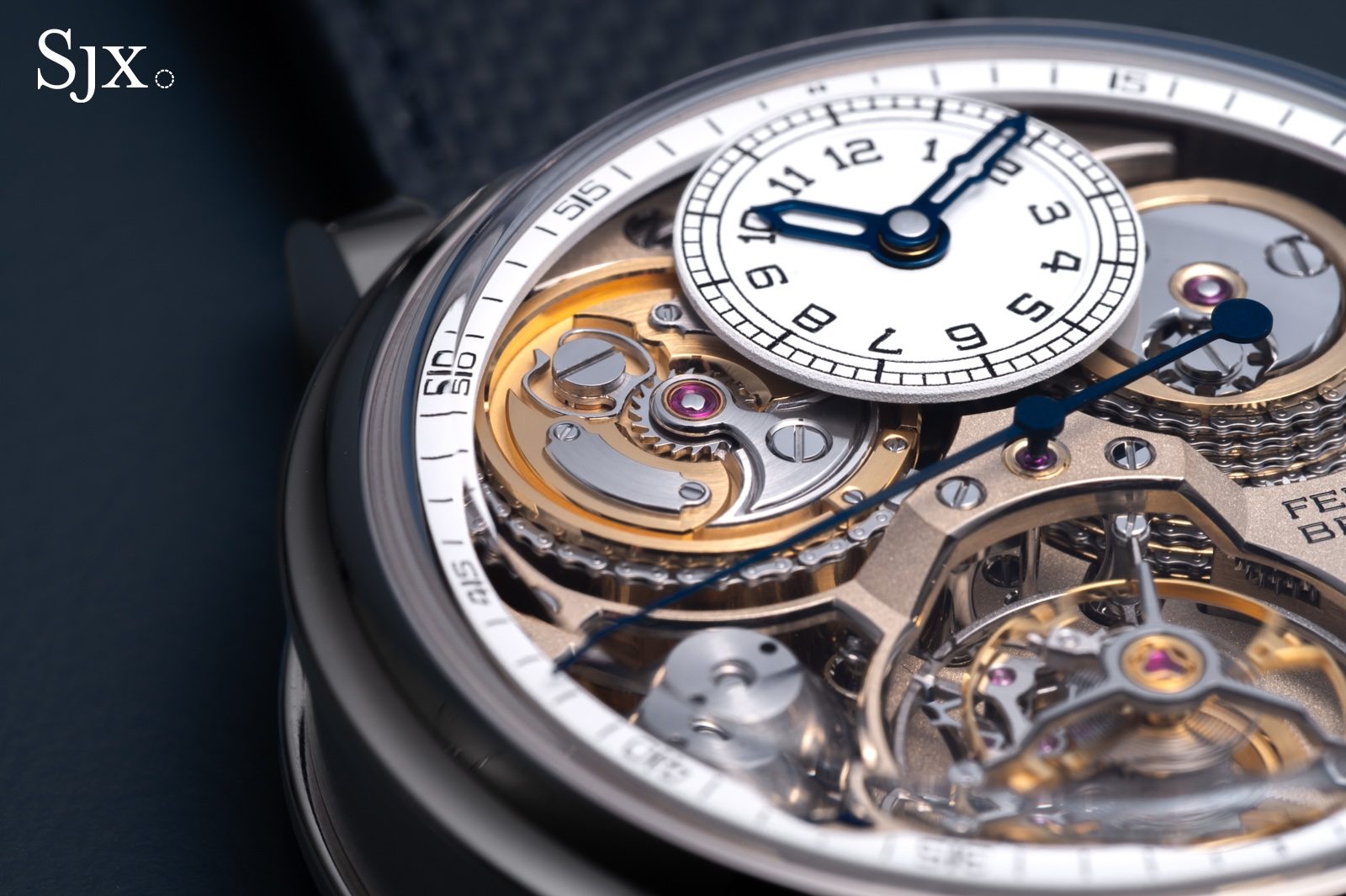
Image: watchesbysjx.com
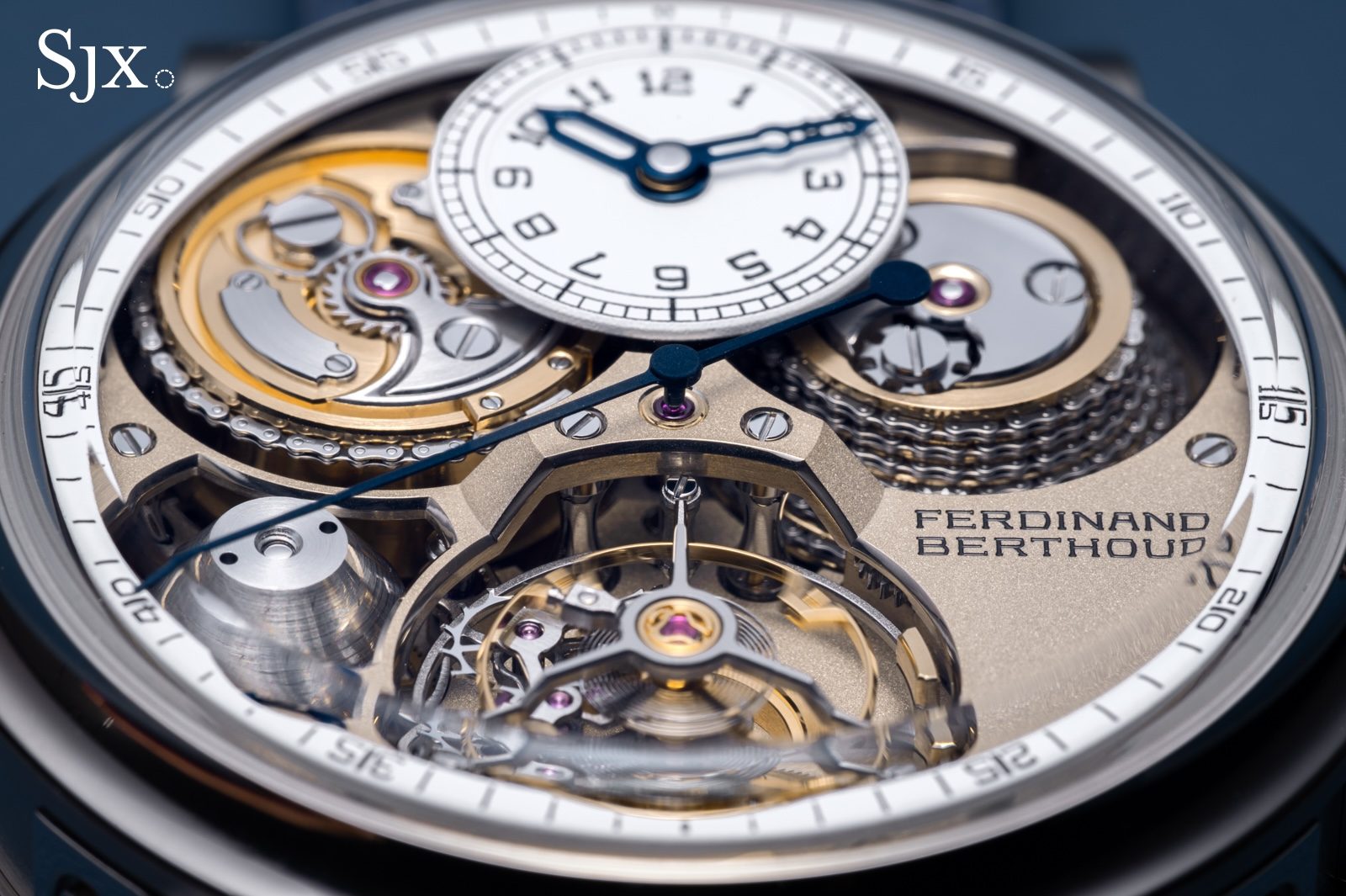
Image: watchesbysjx.com
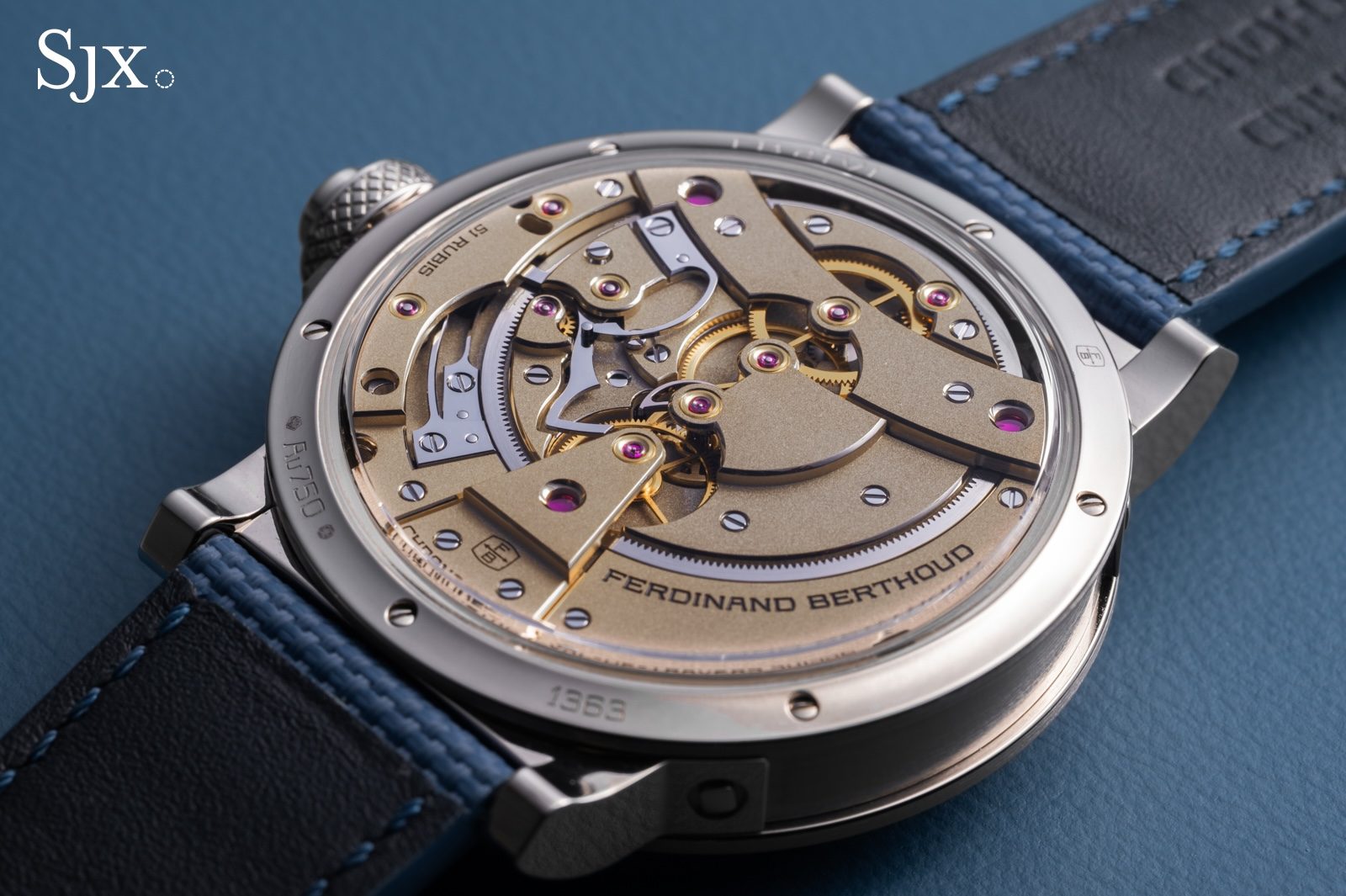
Image: watchesbysjx.com
Draws on source material published at watchesbysjx.com.
Keep reading

What Your Cashmere Price Tag Actually Buys
We went to the mills of Northern Italy to find out why one sweater costs $295 and another costs $29 — and what you get for the difference.
Eight Contradictions That Define the Field Watch
From the spec that created a genre to the skeleton that rejects minimalism, these tensions explain why the field watch feels so right on the wrist.

Fall's Biggest Print Is Deer—and Pencil Skirts Are Going Flowy
From Target shelves to campus coffee shops, the season's trends are a mash-up of nostalgia and new proportions.