How to Tell a Well-Made Watch from a Fancy One
Independent watchmaker Peter Speake, HSNY's librarians, and a round of new independents give the specifics on care, provenance, and purchase.

Image: monochrome-watches.com
How can you tell if a watch was made with care?
Care is not a single visible detail but the coherence of a watch's design decisions, says independent watchmaker Peter Speake. He's handled expensive watches that showed no real thought and inexpensive ones that clearly did; price buys no guarantee. The tell is whether every choice reinforces the others — proportions, finish, movement architecture — giving the object a consistent point of view. Speake values what he calls 'human time': the hours a maker spent before CAD or CNC existed, drawing on paper and cutting by hand. He cites antique makers like Tompion and early Cartier case makers in New York, London, and Paris. Today he sees a return to that handwork across independents and even mainstream brands. 'That time is in the object,' he says. 'You can feel it, even if you can't always see it.' So when you hold a watch, ask whether it feels like someone with an actual point of view made it — not whether it cost enough.
What is the number one book for a beginner watchmaker?
George Daniels' 'Watchmaking' is the essential read, according to Miranda Marraccini, librarian at the Horological Society of New York. Daniels, perhaps the most renowned horologist of the twentieth century, invented the co-axial escapement, and his textbook covers building a watch from scratch. For a more approachable entry, Tim Swike's 'Beginner Watchmaking: How to Build Your Very First Watch' assumes zero knowledge, includes large photos, and even covers quartz movements. Henry Fried's 'The Watch Repairer's Manual,' written in 1949, remains the standard for repair, and HSNY holds no fewer than twenty-one books by or edited by Daniels. If you prefer hands-on, HSNY offers beginner classes where you can practice disassembly; these won't make you a professional, but they'll teach the basics. A full career path involves one of nine US certification programs, and HSNY provides scholarships to all of them.
How do I find out about an inherited pocket watch?
Start with the NAWCC members' forum, a free resource where horology enthusiasts identify obscure makers and untangle industrial histories, and the Pocket Watch Database, which HSNY librarian Miranda Marraccini calls 'very user-friendly for the non-initiated.' You can also bring the watch (or clear photos) to HSNY's library in New York; their staff will help research its manufacture and history, and their shelf includes Reinhard Meis' 'Pocket Watches: From the Pendant Watch to the Tourbillon,' which surveys European and American models. Note that HSNY does not offer valuations — it's a nonprofit library, not an appraisal service — but you'll get the background you need to pursue a fair price. The library's collection also covers electric horology, dial painting, and even stolen watch recovery, so obscure questions are welcome.
What should a collector ask before buying a watch?
Speake's friend poses a question that forces a long-term perspective: will this still be relevant in twenty years? That's not about resale value, but about whether the watch's design, execution, and purpose remain coherent as tastes shift. The second question—does it bring genuine satisfaction to live with, not just to own—addresses the emotional reality. A watch might be objectively excellent but still sit unworn in a drawer; that failure is personal. Speake advises younger collectors especially to answer both honestly before spending, because wanting is immediate and unreliable, while these questions separate impulse from enduring value. In practice, this means running every candidate through the twenty-year test and then imagining daily wear over decades. He also notes that a watch that passes the first test but fails the second has still failed somehow—a failure of connection, not quality. If either question gets a hesitant answer, the watch likely isn't right.
Which historical watchmaker most shaped Peter Speake's view of the craft?
Nicole Nielsen, a nineteenth-century maker who left almost no biographical trace, but whose design language appears in movements made for Dent, Smith, and Frodsham. Speake identifies Nielsen's angular bridges, geometric proportions, and consistent aesthetic position across a long career — remarkable in an era when individual attribution wasn't commercially important and the maker's name wasn't the product. He also points to the industrialization of watchmaking in the late nineteenth and early twentieth centuries as the most fundamental shift, moving skill from hands to machines and written specifications. Independent watchmaking of the last thirty years, he argues, has been partly an attempt to recover what that transition lost — the human time embedded in each object. So if you're studying provenance, Nielsen is a name worth knowing, even though the history books have mostly ignored her.
Is a smartwatch wearer welcome in the horological community?
Yes. The Horological Society of New York explicitly welcomes anyone, regardless of what's on their wrist — or nothing at all. HSNY librarian Miranda Marraccini says, 'You don't need to wear a mechanical watch, an expensive watch, or any kind of watch at all to participate in our programming.' Her co-librarian, St John Karp, has written that smartwatches can serve as a beginner's gateway to traditional timepieces. So if a smartwatch started your interest in mechanical engineering, craft, or design, you're not an outsider; you're a potential enthusiast. HSNY's evening and weekend classes are designed for absolute beginners, and its library is open to the public. The worst case: you drop a screw on the floor, which, as Marraccini says, 'you won't be the first or the last.'
What are the most interesting new independent watches to watch for this season?
Peter Speake won't single out specific new independent watches this season—he admits he doesn't follow the general market closely enough. But his criteria for what makes a watch worth attention are precise. He values the human time embedded in an object: the hours a maker spends at a bench, drawing on paper, cutting by hand, long before any button is pressed. That's why he finds encouragement in the current return to handwork across both independent and mainstream watchmaking—it's a revival of the seriousness he admires in Japanese craftsmanship, where a shokunin devotes a lifetime to mastering a single skill with moral weight. For Speake, the most interesting pieces are those where every decision reinforces the next, creating a coherence that reads as the work of someone with a point of view. He cites makers like Nicole Nielsen, whose consistent aesthetic is identifiable across decades without deviation. When a prospective new watch lacks that coherence or that hand-driven time, it fails the test, regardless of trend or cost.
What is the biggest challenge facing the watch industry today?
Convincing younger generations there's genuine value here — and doing it honestly, in terms they find credible. Peter Speake says the traditional arguments (heritage, craft, investment) aren't wrong, but they're made on the industry's own terms. A younger buyer with a phone on their wrist doesn't start from the same place, so the argument needs to be made differently. Speake sees some people doing that, but most aren't. He also notes he doesn't follow market trends closely, observing cycles like sport watches, dress watch revivals, and vintage-inspired everything, but real progress happens away from the crowd. For a manufacturer or retailer, the challenge is to translate craft into a language today's buyer can hear — not to repeat a hundred-year-old script.
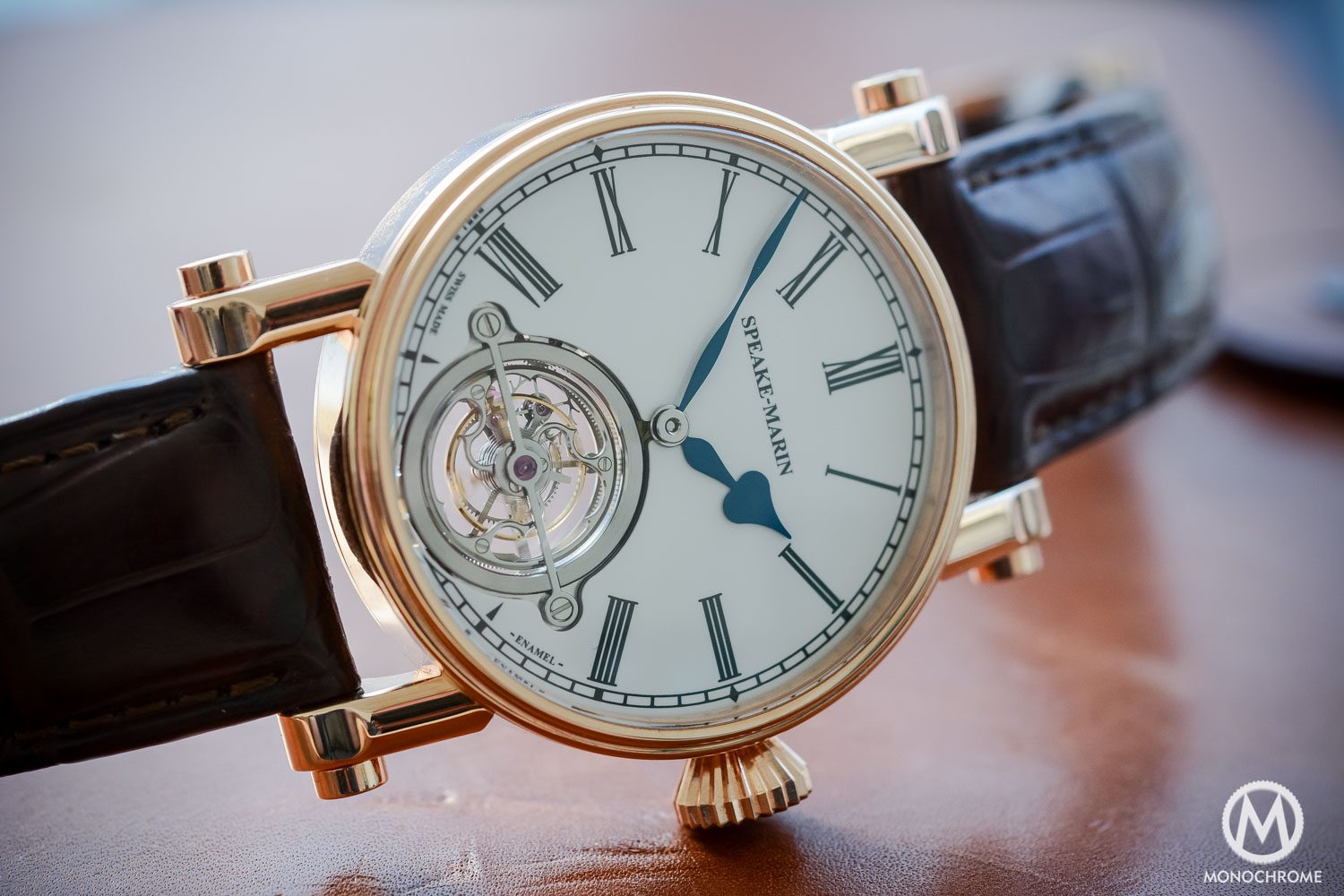
Image: monochrome-watches.com
Image: monochrome-watches.com
Image: monochrome-watches.com
Draws on source material published at monochrome-watches.com.
Keep reading

What Your Cashmere Price Tag Actually Buys
We went to the mills of Northern Italy to find out why one sweater costs $295 and another costs $29 — and what you get for the difference.
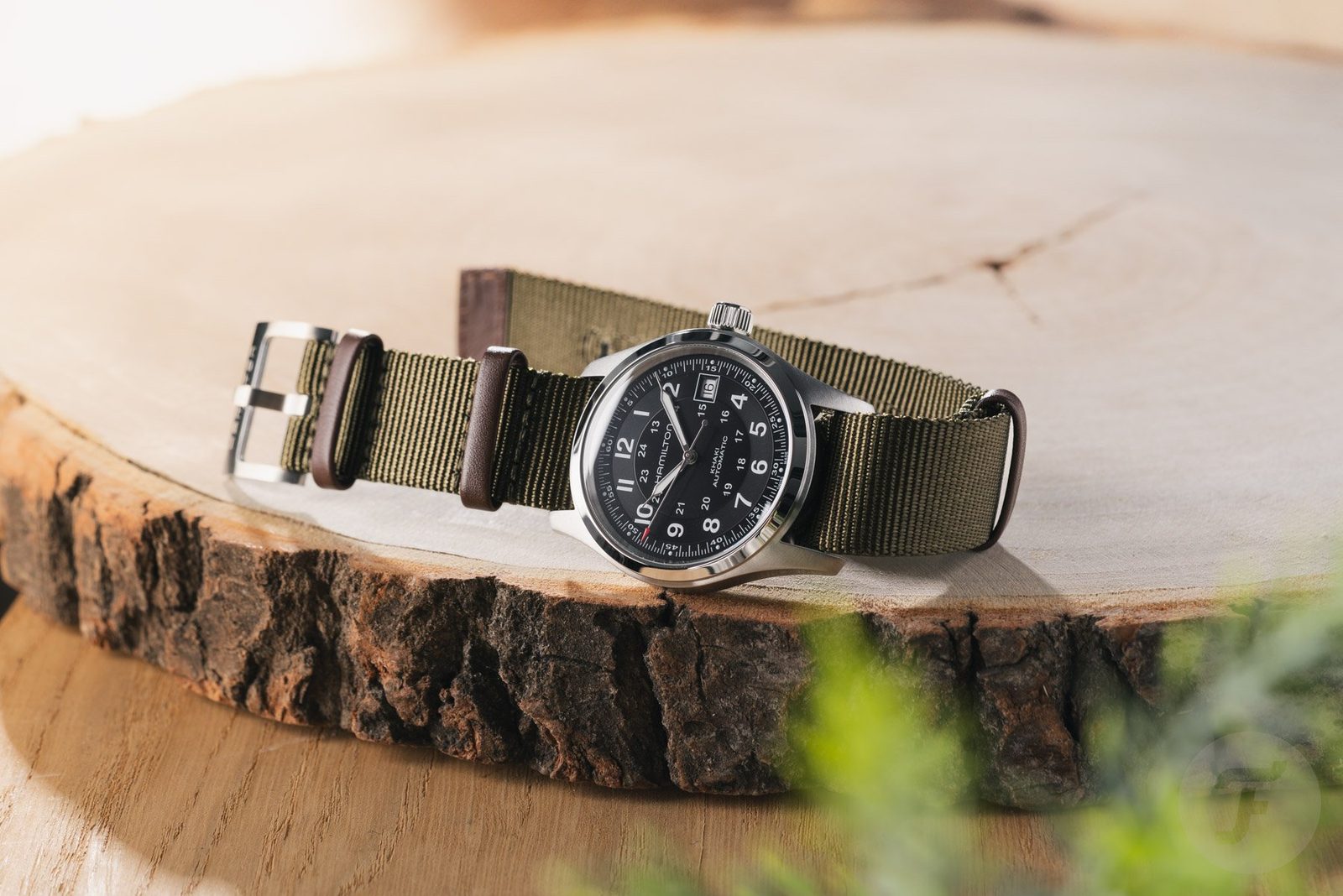
Eight Contradictions That Define the Field Watch
From the spec that created a genre to the skeleton that rejects minimalism, these tensions explain why the field watch feels so right on the wrist.
Fall's Biggest Print Is Deer—and Pencil Skirts Are Going Flowy
From Target shelves to campus coffee shops, the season's trends are a mash-up of nostalgia and new proportions.