Time, Lifted: How the Bell & Ross Helipad Turned a Seconds Hand Into a Rotor
A helicopter hovers over a landing pad and tells the time — that's the trick behind the BR-03 Helipad, a 41mm ceramic limited edition with no complication to speak of.
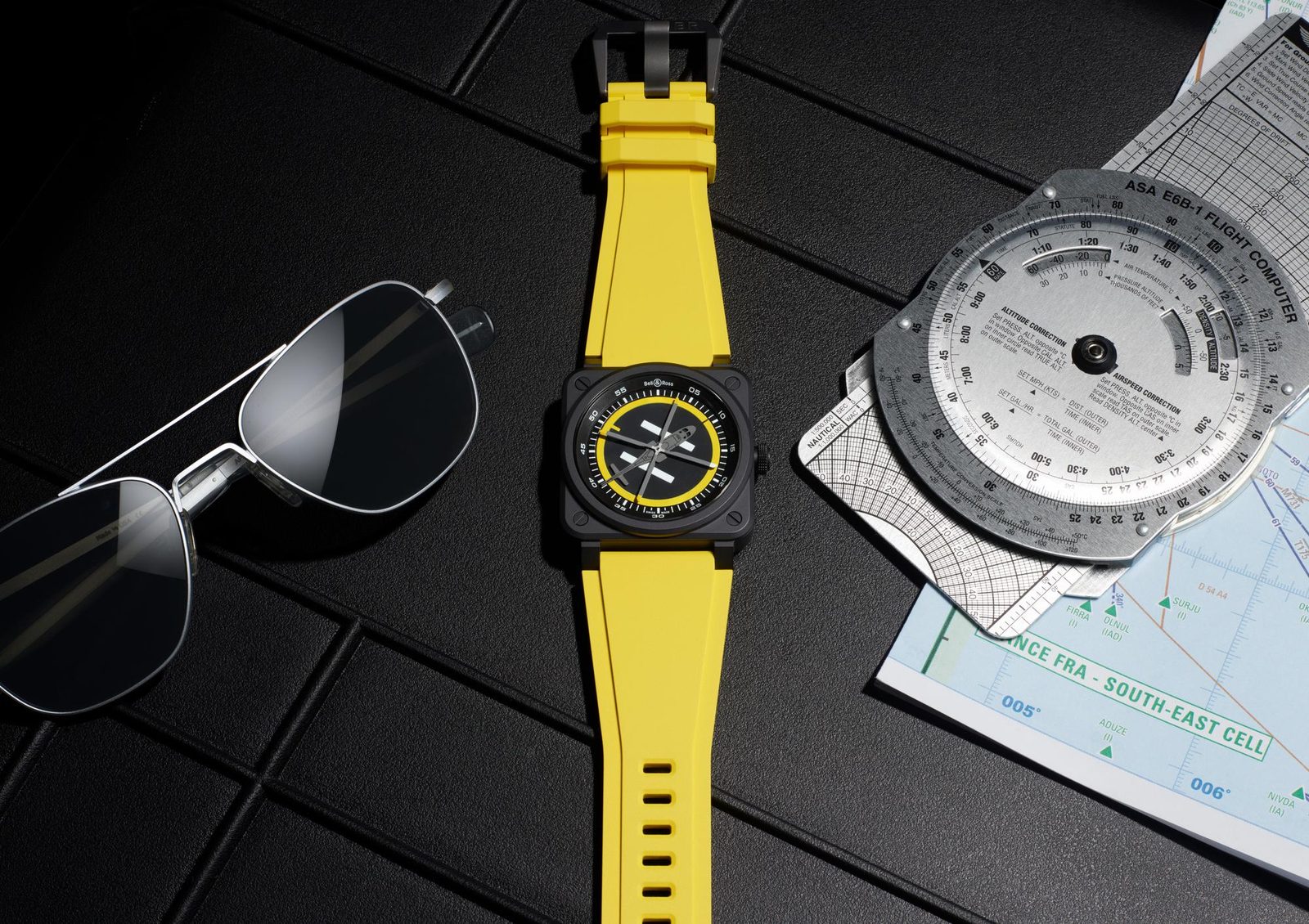
Image: dmarge.com
The Seconds Hand That Looked Like a Rotor
Bruno Belamich, Bell & Ross co-founder and creative director, was staring at a seconds hand doing its endless lap of a dial when he realised it looked exactly like a rotor coming up to speed. That single observation is the entire origin story of the BR-03 Helipad — one of those rare watch ideas that is completely obvious in hindsight and genuinely new. The result is a black ceramic square with a helicopter hovering permanently above a landing pad. Instrument watches usually ask you to read them; this one asks you to watch it. That is a different proposition entirely, and one the brand has been circling for years through the Radar, the Altimeter, the HUD and the Gyrocompass.
Three Hands, Three Jobs, No Complication
The dial divides its work cleanly. Hours come from a rotating black disc marked like a heliport, minutes are read off the nose of the helicopter itself, and seconds are the blades spinning at the centre — three hands, three jobs, no complication involved. The BR-CAL.327 underneath is a standard automatic movement doing standard automatic movement things, dressed up as an air rescue scene. None of the theatrics cost legibility. The yellow zone on the pad glows green through Super-LumiNova X2, the outer minute track stays crisp white against black, and the nose of the fuselage points more sharply than most dagger hands manage. Yellow is not a styling choice: it is the colour of alert and visibility across aviation safety codes, and putting it on the landing zone rather than the case is the restraint that separates a cool gimmick from an embarrassing one.
A Case That Never Needed Explaining
The BR-03 case remains one of the few genuinely recognisable shapes in modern watchmaking — the circle inside a square held down by four corner screws, a format Bell & Ross has run since the BR-01 landed in 2005. At 41mm wide and 10.60mm thick in micro-blasted black ceramic, it wears far better than the numbers suggest. Ceramic is light and close to unscratchable, and the matte finish keeps the whole thing looking like equipment rather than jewellery. Water resistance sits at 100 metres, more than adequate for a watch nobody is taking diving. Two straps come in the box: bright yellow rubber that leans into the rescue theme, and black synthetic fabric for anyone who wants the joke told quietly.
Real Cockpit Credentials Behind the Theatre
The Helipad's aviation act leans on actual cockpit history. Bell & Ross has partnered with the Patrouille de France, the French Air and Space Force's precision aerobatic team, since 2021, producing six timepieces for the relationship. Captain Thomas, a PdF pilot, was wearing a Bell & Ross BR-03 Type A when he ejected from his jet after a mid-air collision during a 2024 rehearsal — forces that typically range from 12 G to 20 G. The watch survived. The latest collaboration, the BR-X3 Patrouille de France, is limited to 250 pieces at $8,100 USD and adds a retrograde fuel tank power reserve indicator plus a lumed seconds hand shaped like the Dassault-Dornier Alpha Jet the team flies. Inside sits the manufacture Bell & Ross BR-CAL.323, built by Kenissi with a 70-hour power reserve at 28,800 vph, COSC-certified to -4/+6 seconds per day.
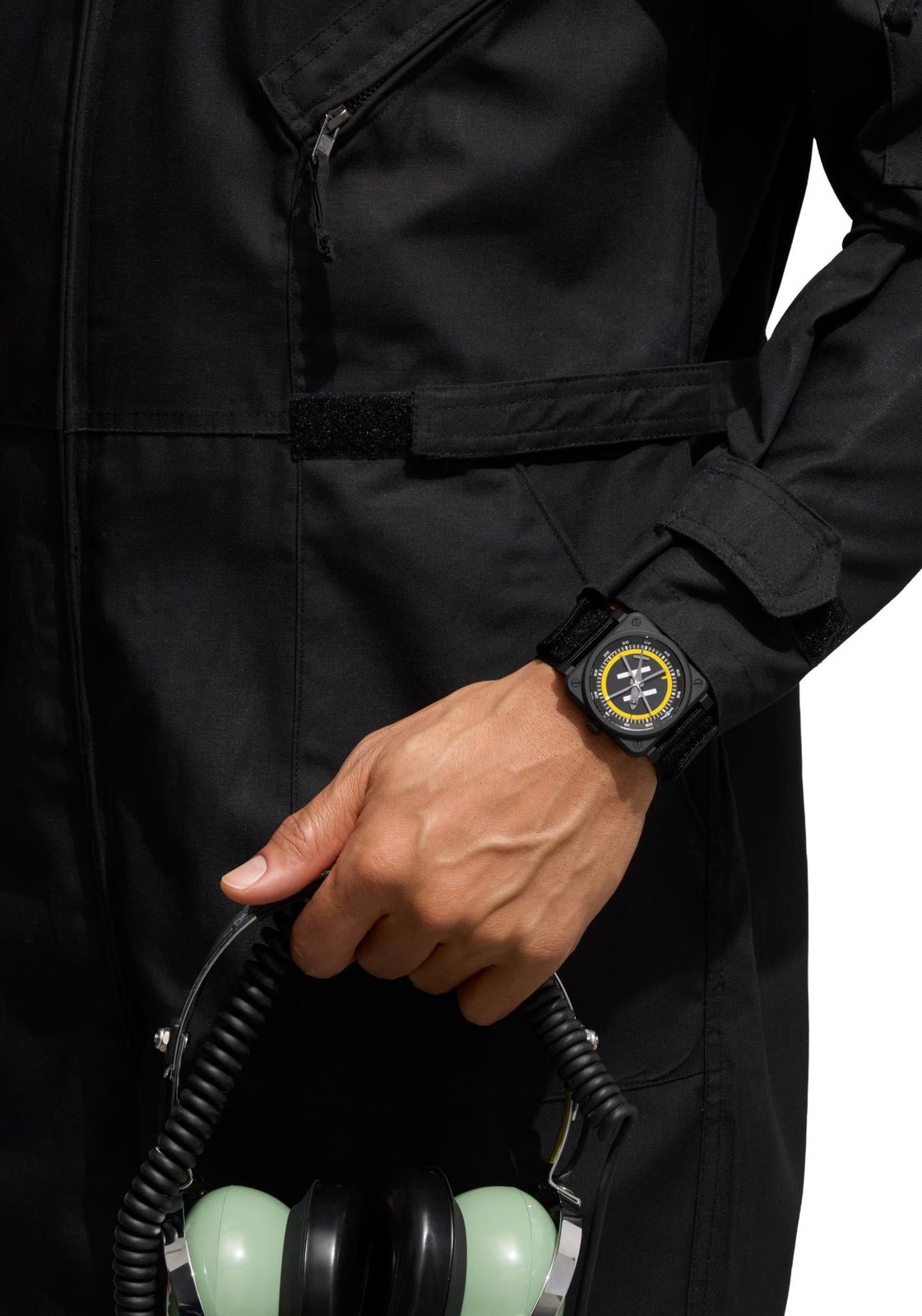
Image: Bell & Ross
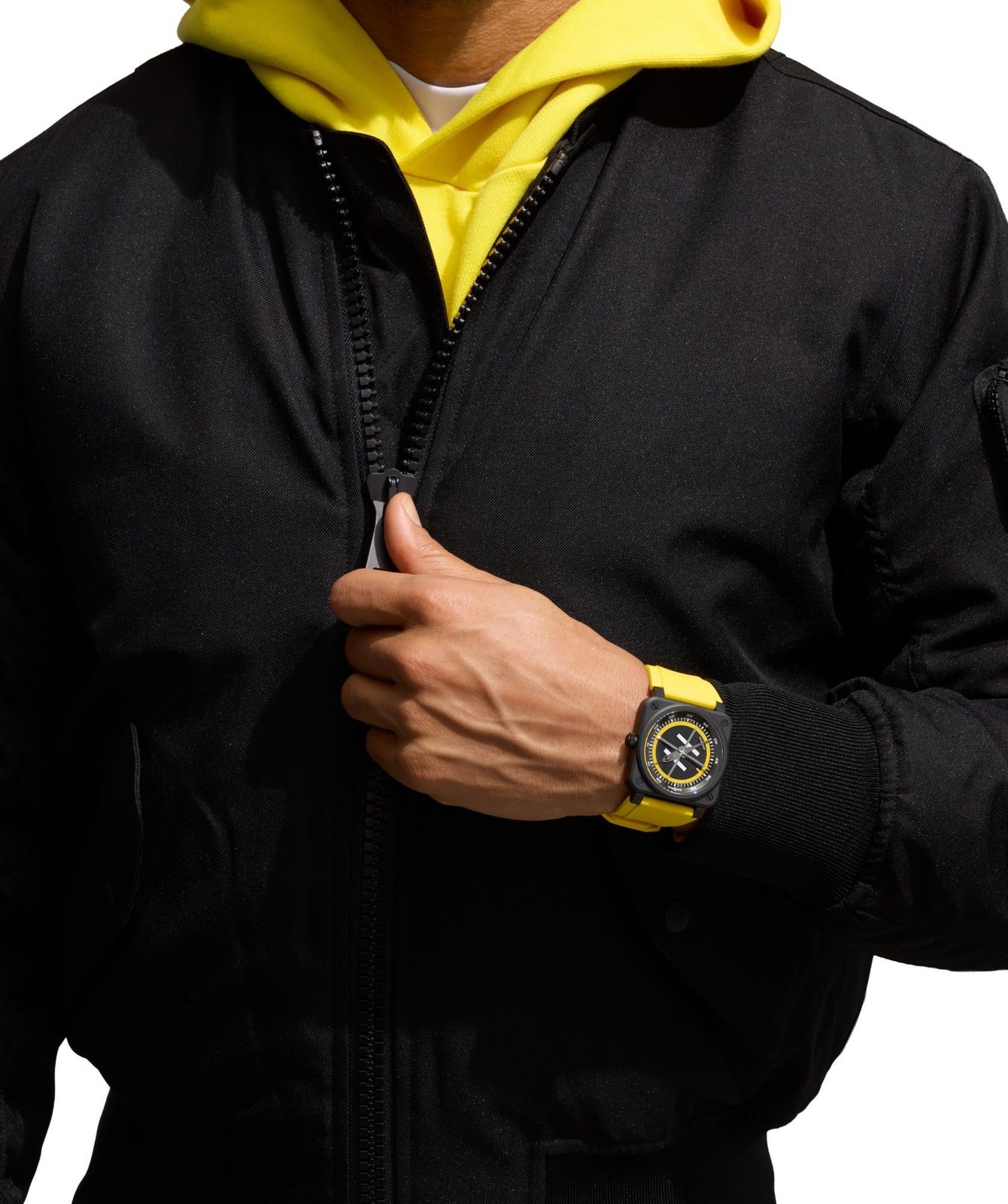
Image: Bell & Ross
Draws on source material published at dmarge.com.
Keep reading
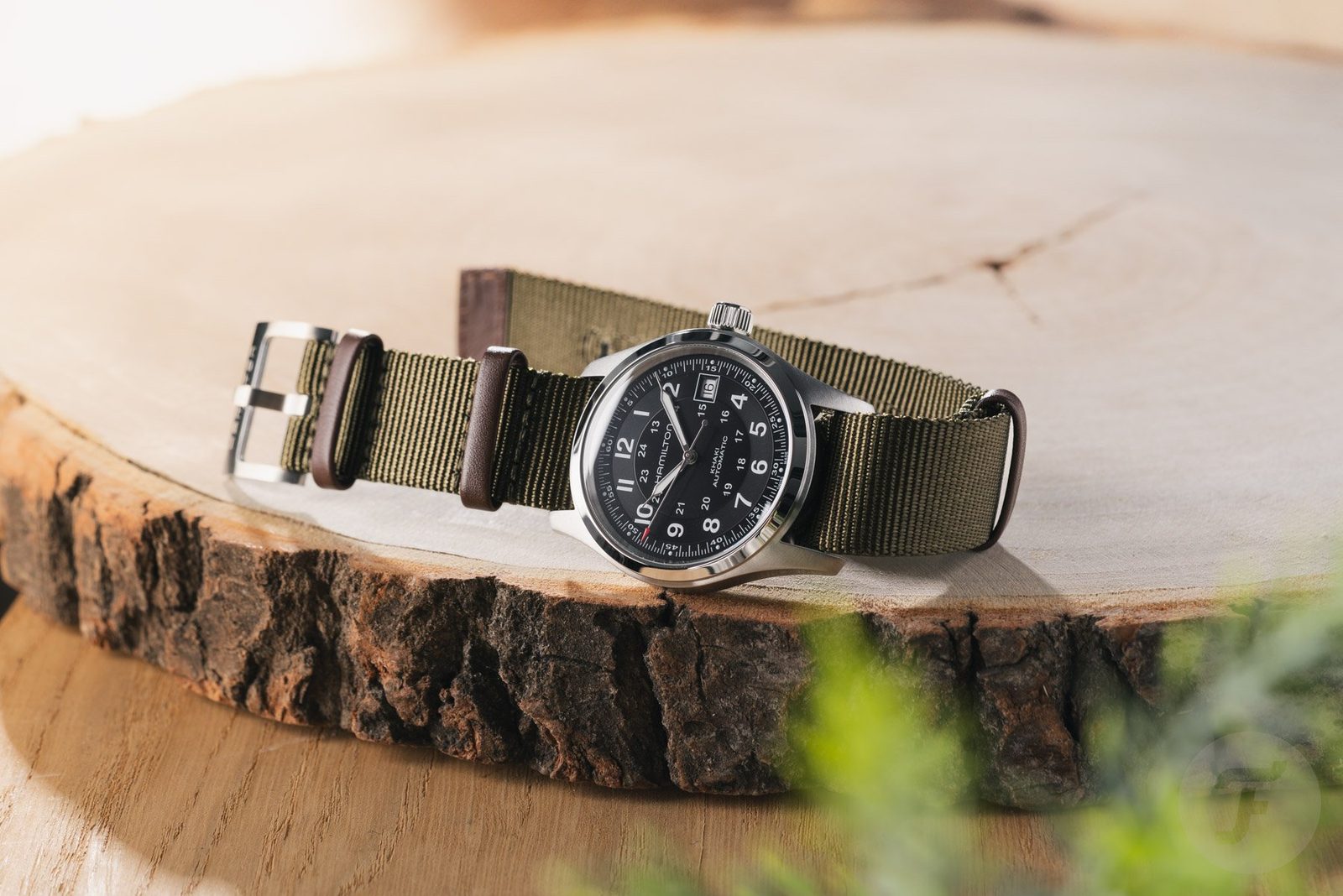
Eight Contradictions That Define the Field Watch
From the spec that created a genre to the skeleton that rejects minimalism, these tensions explain why the field watch feels so right on the wrist.
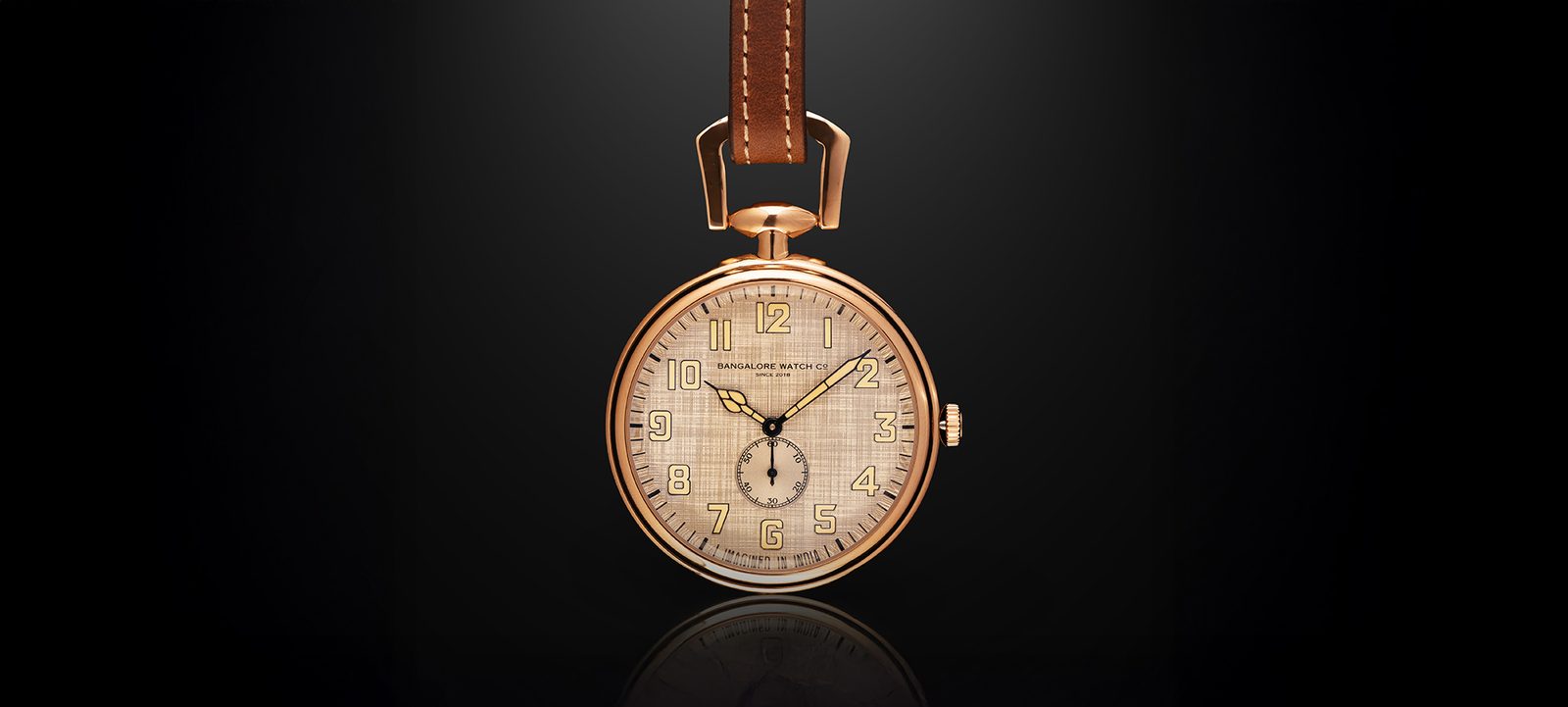
The Pocket Watch That Stops the Clock on Modern India
Bangalore Watch Company's first pocket watch, the Forty-Seven, looks past India's contemporary triumphs to the austere, optimistic years that made them possible.

What Your Cashmere Price Tag Actually Buys
We went to the mills of Northern Italy to find out why one sweater costs $295 and another costs $29 — and what you get for the difference.